Hello everyone! Welcome back to Genealogy Basics the series where I explain the basics of Ashkenazi Genealogy. This weeks post shall be about reading Hebrew and Yiddish on graves, and knowing what it means.
If you haven’t read my previous post in this series (Genealogy Basics part 1: Hebrew and Yiddish names, and their common anglicizations) I would go and read it as it will be fairly helpful knowing anglicizations for Hebrew names, but if you haven’t don’t worry! You don’t need to to find this post helpful.
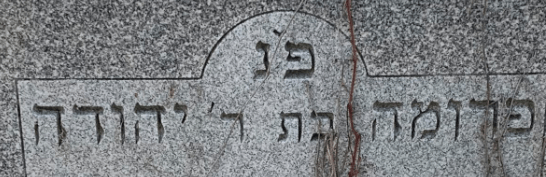
First let’s start off with what Hebrew you would expect to find on graves, and how it’s helpful, you will usually find a person’s Hebrew name, and their fathers! Which can be so helpful especially if their marriage certificates and death certificates don’t list them.
You can also commonly find their date of death in the Jewish Calendar.
In order to do this you’re gonna have to be able to recognize different parts of the Hebrew on the grave which may sound hard but don’t worry it’s not as hard as it sounds!
Recognizing Hebrew
This is the grave I’m gonna walk you through with the different sections highlighted, which lists Harry and his father’s Hebrew names (red and orange respectively), and Harry’s date of death (dark purple).
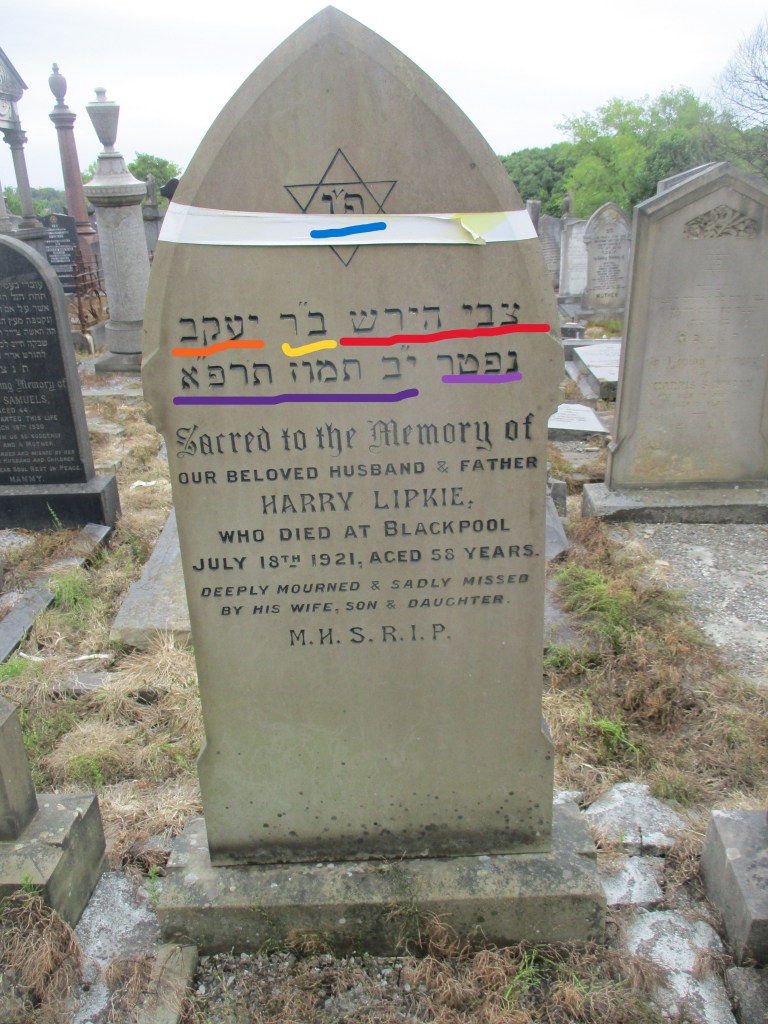
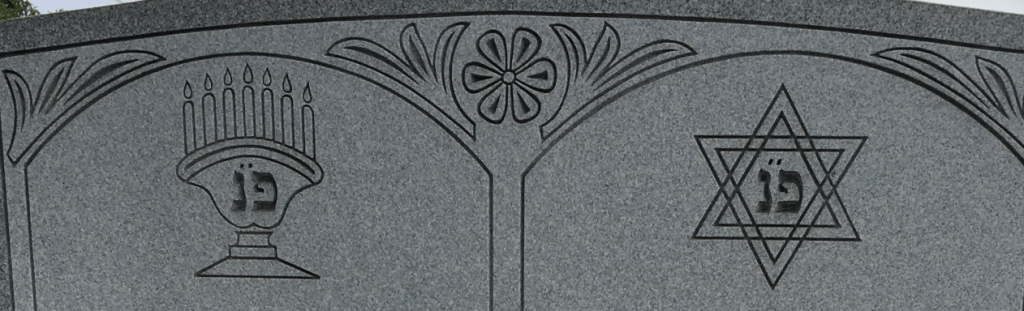
Now the first part the light blue, it’s partially covered up but the first part is “פ’נ” which means Here Lies. It’s usually on the top of a headstone and is the first bit of Hebrew written. Even if there is no other Hebrew on a grave you can still expect to see it most of the time.
Now we’re gonna skip the red part for now and focus on the yellow part which is the most important part of a grave to find other parts if you don’t know Hebrew. It is son/daughter of, now while that might not sound that important finding this part you can immediately tell where the person buried and their father’s Hebrew name is located.
Now the yellow part can be written three different ways, ב’ר, בן , בת which means respectively Daughter Of, Son of, and Son/Daughter of Mr. while to the right/before of it (remember Hebrew is written right to left unlike English) will always be the Hebrew name of the person buried, and to the left of/after it will be their father’s Hebrew name.

Now you know about that let’s go back to the red part, the Hebrew name of whoever is buried. Now this might be hard but here you should try to tell what each Hebrew letter is here and put write it down here where you can then click “Translate from Hebrew” and if you inputted the name right it will tell you the English version of it!
Now I know that’s hard so if you can’t you still now know where in the grave that info is which is helpful if you’re asking others to translate it, or if you’re taking a photograph of a grave you know what part to be sure to include in your photos!
Next up is the light purple part “נפטר” which is Hebrew for passed away. Now while most graves do indeed use this some other graves use different versions of it, so if you don’t see it on a grave don’t worry it’s fine!
And finally the dark purple part which is the date of death in the Jewish calendar, now if you already have the deceased’s death date in the regular calendar then this won’t help much but if you still want to know I recommend using this site to help
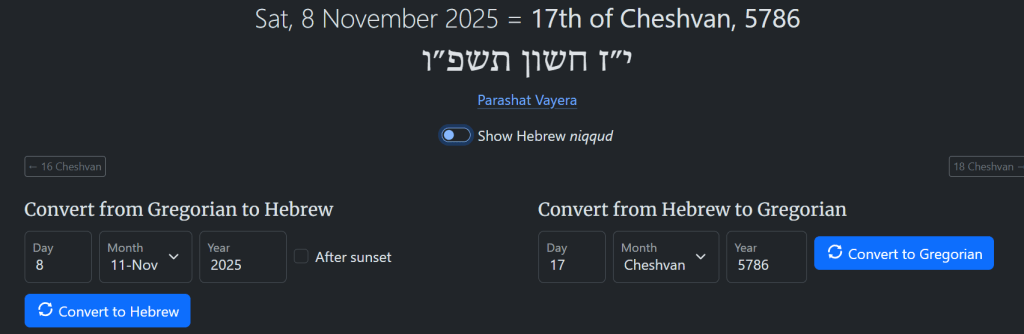
Now this site is fairly easy to use, on the left side under where it says “Convert from Gregorian to Hebrew” enter the regular date there and click on the button labeled “Convert to Hebrew” right under it.
Once you do that it will show you some Hebrew on top, once it does make sure the “Show Hebrew niqqud” is off (the slider is to the left) and viola the Hebrew there is what you should find on the grave.

Now we’re going to be talking about one final thing relating to the Hebrew which isn’t actually shown on this grave but is very common to find either at the end of the Hebrew section or at the bottom of a grave I’m talking about “תנצב’ה” which is an acronym for “May His/Her soul be bound in the bond of Eternal Life” which is paraphrased from a quote in the Torah (1 Samuel 25:29)

Next Week
And Finally thank you so much for reading this post! This is very much an introductory and basic post about Jewish graves, if you want to go more in depth I recommend this wonderful article by Philip Trauring over at Blood & Frogs that goes so much more in depth compared to this one.


Leave a reply to Genealogy Basics part 1: Hebrew and Yiddish names, and their common anglicizations – Jewish Genealogy Cancel reply